The place … was one of those receptacles for old and curious things which seem to crouch in odd corners of this town, and to hide their musty treasures from the public eye in jealousy and distrust. There were suits of mail, standing like ghosts in armor, here and there; fantastic carvings brought from monkish cloisters; rusty weapons of various kinds; distorted figures in china, and wood, and iron, and ivory; tapestry, and strange furniture that might have been designed in dreams.–Charles Dickens, The Old Curiosity Shop
Isn’t it interesting that while they do exist almost everywhere, you will be hard-pressed these days to find a curiosity shop labeled as such. (That’s really a statement, not a question.) This is too bad, for the designation not only carries with it a vintage texture and sense of history (not to mention an allusion to Lady B’s inimitable favorite Victorian author), but also because the more modern iterations are not nearly as poetic. Nor do they call up the intellectual and imaginative connotations of curiosity, a desire to know and to learn which is sorely lacking in so many quarters of contemporary society.

A motley assortment of “old and curious things.”
Instead of curiosity shops (which of course many of them are), these places commonly call themselves Eclectic Shops, Malls, or Co-ops. By way of further definition, you might see numerous signs on the store’s facade or cluttering the space outside, cataloguing the contents to be discovered within: PRIMITIVES, DOLLS, ART, DÉCOR, COINS and so on. (One nearby cottage store specializes in “funky junque,” a description I appreciate since it confirms that I need not venture inside.)
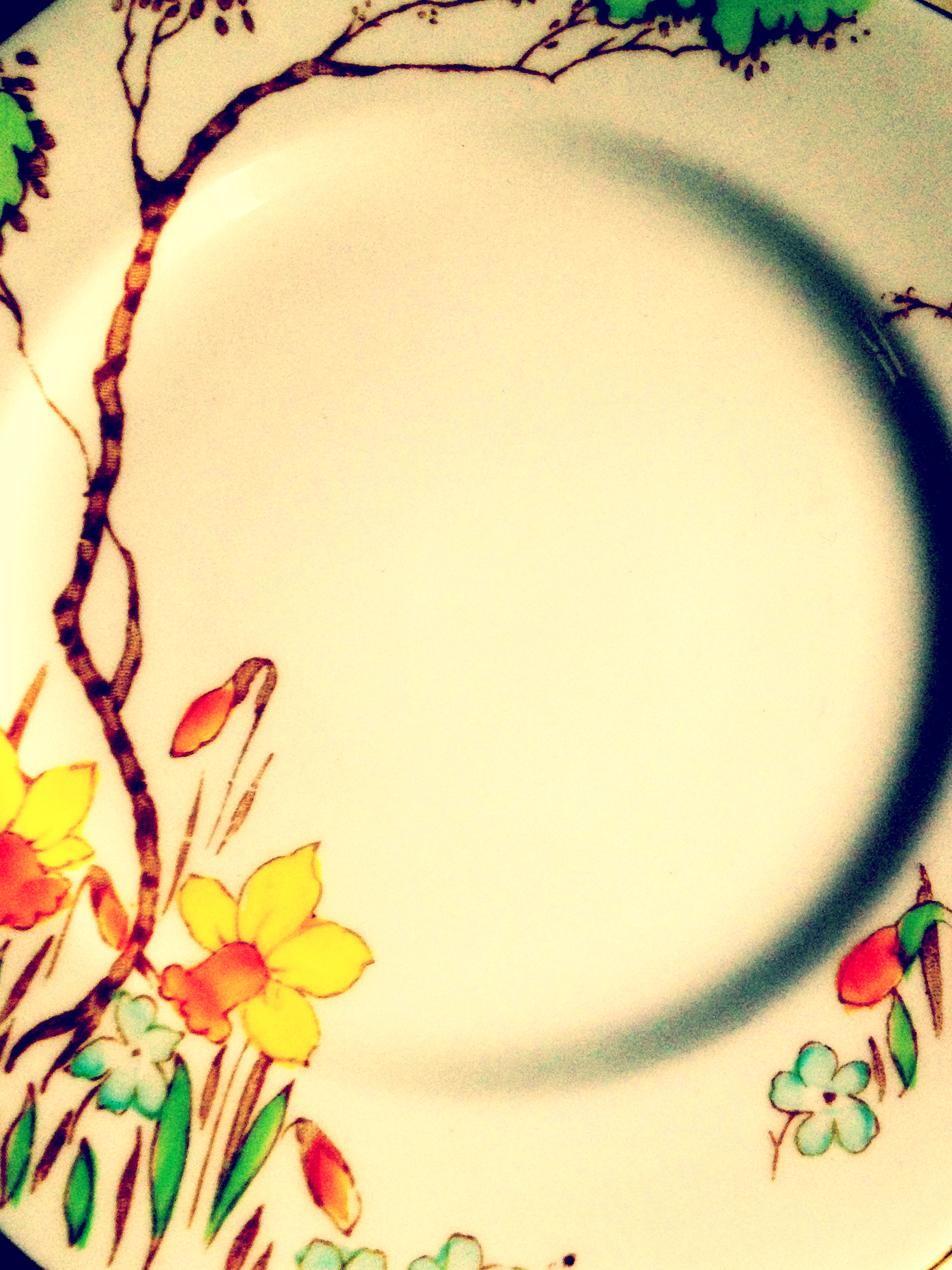
Art Deco Roslyn Fine Bone China, circa 1940s.
The whole scheme of eclecticism, malls, and coops is certainly consistent with the curiosity shop; you know to expect a motley assortment of items in various stages of organization and representing a grab bag of historic, historical, use, and dollar value. You therefore enter such a shop prepared to find a fetching piece of blue-and-white transferware of indeterminate age (chipped only very slightly) or a framed sketch of Someone’s spaniel (capably executed), dated 1964. You may have some boxes of rhinestone brooches (without fail, these always smell like the inside of my grandmother’s jewelry box) beside a bunch of needlepointed tea towels. Lamentably, a few Beanie Babies might even be thrown in here or there (and this is why you must beware of shops advertising “collectibles”). Some items are overpriced, some are fairly priced, and some are not priced at all. (It is not likely many items are underpriced, however.)

You didn’t know it existed, but it enriches your collection. McCoy Lamp, circa 1950.
It is this dependable unknowability, this utter surprise, of the curiosity shop—no matter what name it goes by—that keeps the intellectual and imaginative shopper hooked–and curious. I think very few people enter a curiosity shop looking for one specific thing, yet many leave having added to their collection some unforeseen piece or other, some odd or end, that they didn’t know existed before, but that enriches it (and them) indescribably.


 The Old Curiosity Blog